Challenge
Pointing in space is hard
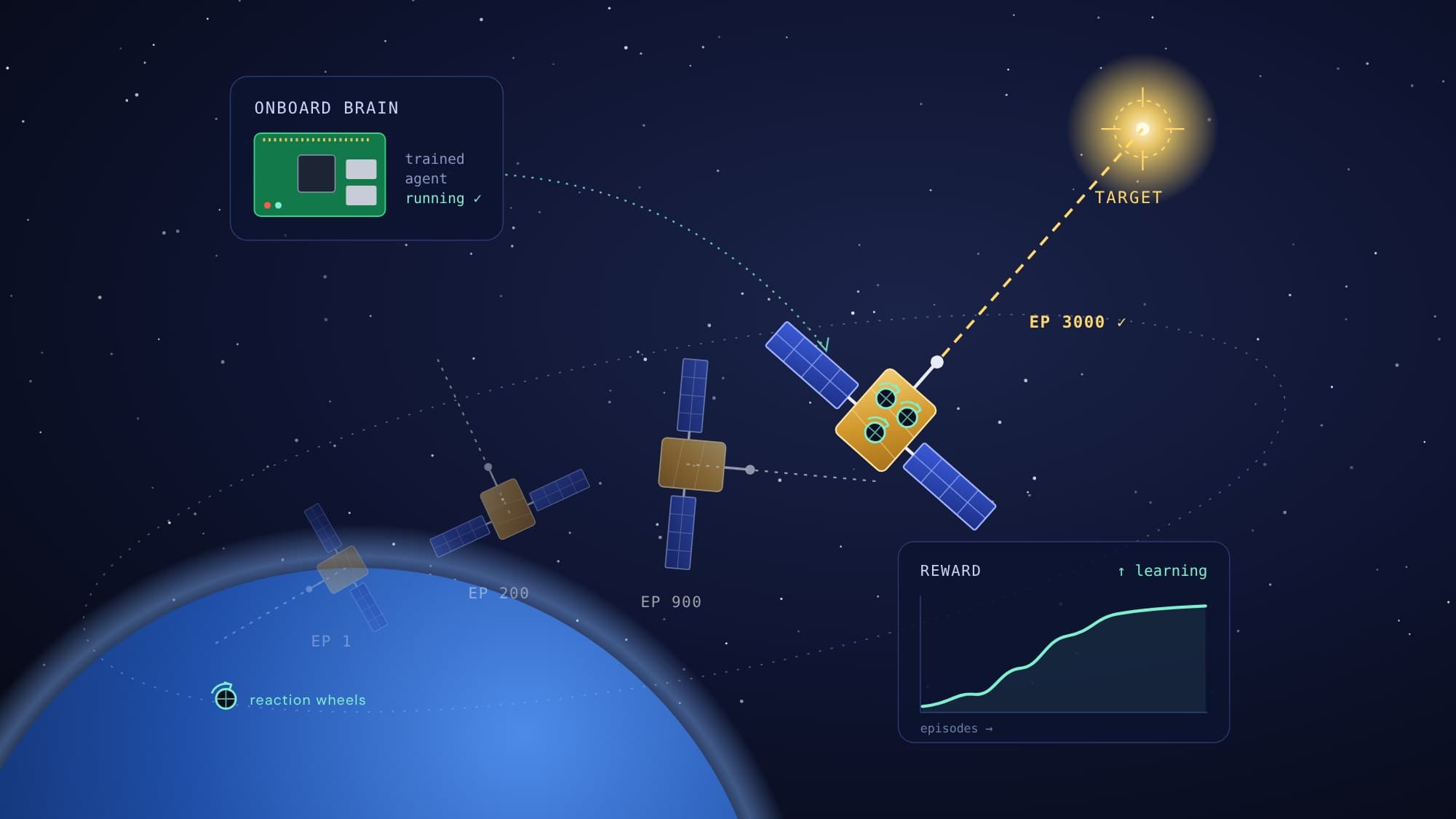
A spacecraft has to face exactly the right way: its antenna towards Earth, its camera towards a target. In space there is nothing to push against, so it turns itself with reaction wheels, spinning wheels inside the spacecraft. Speed a wheel up one way and the spacecraft slowly rotates the other way.
Doing this well means turning quickly, stopping right on target and not wasting energy. Normally engineers hand-tune a controller for that. We wanted to see if an AI could learn it on its own.
How it works
How the AI learns to steer
1. A practice space
We built a virtual spacecraft with reaction wheels in Basilisk, a spacecraft simulator, so the AI could practise thousands of times without risking real hardware.
2. Trial and reward
At each moment the AI sees where the spacecraft points and how fast it spins, then decides how to drive the wheels. Getting closer to the target earns a reward; overshooting or wasting effort costs points.
3. Easy to hard
Training started with small, easy turns and slowly moved to bigger ones, like learning to ride a bike with training wheels. The AI used an algorithm called soft actor-critic.
4. Onto real hardware
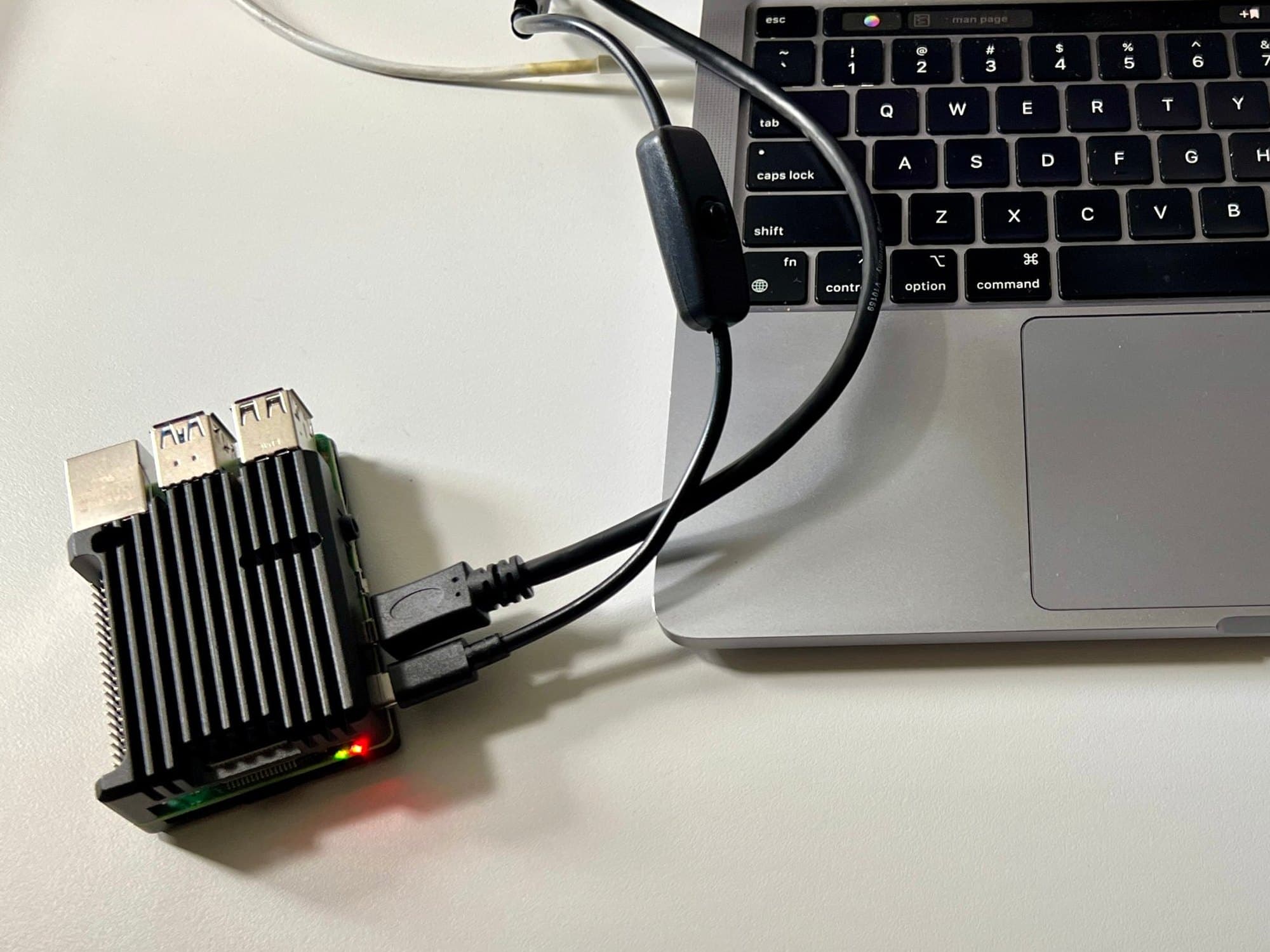
The trained AI was moved onto a Raspberry Pi, a small computer standing in for the spacecraft's own, and tested while connected to the simulation.
Testing
From simulation to a real computer
The AI first ran inside the simulation on a laptop, then on the Raspberry Pi. Running it on separate, small hardware showed that the trained AI is light enough to work on the kind of computer a real spacecraft carries.
Measuring success
How we judged it
Settling time
How quickly the spacecraft reaches the target direction and stays there.
Control effort
How much the reaction wheels have to work, which means energy used.
Accuracy
How close the spacecraft ends up to exactly the right direction.